This is default featured slide 1 title

Go to Blogger edit html and find these sentences.Now replace these sentences with your own descriptions.This theme is Bloggerized by Lasantha Bandara - Premiumbloggertemplates.com.

This is default featured slide 2 title

Go to Blogger edit html and find these sentences.Now replace these sentences with your own descriptions.This theme is Bloggerized by Lasantha Bandara - Premiumbloggertemplates.com.

This is default featured slide 3 title

Go to Blogger edit html and find these sentences.Now replace these sentences with your own descriptions.This theme is Bloggerized by Lasantha Bandara - Premiumbloggertemplates.com.

This is default featured slide 4 title

Go to Blogger edit html and find these sentences.Now replace these sentences with your own descriptions.This theme is Bloggerized by Lasantha Bandara - Premiumbloggertemplates.com.

This is default featured slide 5 title

Go to Blogger edit html and find these sentences.Now replace these sentences with your own descriptions.This theme is Bloggerized by Lasantha Bandara - Premiumbloggertemplates.com.

Jumat, 06 Juni 2014

Gratin originated from French macaroni gratin

Macaroni Gratin is a casserole dish with macaroni and creamy white sauce that is a popular western style dish in Japan.  Piping hot Macaroni Gratin is a perfect food for warming up during a cold winter.

Hasil gambar untuk Macaroni Gratin

Gratin originated from French macaroni au gratin, but today it is eaten widely at restaurants and home in Japan.  The dish has been “improved” to Japanese people’s taste over the years, and it may not be so French any longer.  It is often found on the menu at old fashioned cafes that serve light food.  Just like Spaghetti Neapolitan, this gratin is also a staple western style Japanese dish at those cafe restaurants. Frozen gratin is also a very popular and convenient choice in Japan.  Only thing you need to do is pop it in the oven, and done.

While making Macaroni Gratin is not as easy as having the frozen one, still it is quite simple to make it at home.  Baking gratin in individual dishes is the Japanese style since Japanese ovens are often pretty small.  You could even bake it in a toaster oven.  However, you can make it in a big dish, more of an American casserole style, if you like.  The cheese they use in Japan is usually a processed melting cheese for cooking rather than natural cheese.  It tastes very mild, and the closest substitute may be mozzarella cheese.  We used chicken in the recipe, but you can also use shrimp.  Add more vegetables if you wish.

It doesn’t contain seaweed or rice, but Macaroni Gratin is still a Japanese food Japanese people normally eat, and you should definitely give it a try!

Macaroni Gratin Recipe

Hasil gambar untuk Macaroni Gratin

Ingredients :

5 oz (150g) macaroni

1/2 lb (225g) chicken thighs

1 brown onion


1 tsp oil

4 Tbsp butter

4 Tbsp flour

2 1/2 cup (600ml) milk

1/2 tsp salt

white pepper

mozzarella cheese

Instructions :

Hasil gambar untuk Macaroni Gratin

Preheat oven to 400 F.
Cook macaroni in boiling water with salt according to the package.
Cut chicken into bite-size pieces, and slice onion thinly.
Heat oil in a frying pan at medium heat, and cook chicken until brown. Add onion and a little bit of salt and pepper. Cook further until the onion softens. Set aside.
In a different pot, melt butter at medium heat, add flour, and cook for a couple of minutes until the sauce bubbles. Add milk and whisk well so there are no lumps. When the sauce gets thicken, season with 1/2 tsp salt and pepper.
Set 1/3 of the sauce aside. Add chicken and drained macaroni into the 2/3 of the sauce and mix. Put it in a baking dish, and pour the remaining 1/3 of the sauce over the macaroni. Cover with mozzarella cheese, and bake in the oven on the upper rack for 13-15 minutes.
Selasa, 17 September 2013

Futomaki is a kind of sushi roll

Futomaki is a kind of sushi roll having a variety of fillings such as vegetables and seafood (cooked). It is much thicker than Tuna rolls or cucumber rolls, and the fillings are cooked and flavored, thus you don’t really need to dip in soy sauce (unless you want to).

Hasil gambar untuk futomaki sushi

Futomaki is eaten throughout the year; however, it is a main dish for Setsubun (February 3rd), the day of prayer for a good year without any illnesses and disasters.  It is said that the custom  started in the end of the Edo era (mid-19th century) among merchants in Osaka hoping for prosperous business.  Today eating Futomaki is a more commercial than traditional function like a lot of other festive events.  Futomaki in Setsubun is also called Ehoumaki (good luck roll), and people eat Ehoumaki facing to the good luck direction of the year (2016 is south by south east 🙂 to hope for good luck for the year.  Some people believe cutting the roll is cutting the luck it represents and they eat the whole roll without cutting it into pieces.

The fillings could be anything, but usually are cooked vegetables or some cooked seafood.  Popular ingredients are cooked sweet Kanpyo (ribbons of dried gourd) and/or Shiitake mushrooms, grilled unagi, Tamagoyaki or Datemaki, sweet fish flakes, boiled spinach and so on.  You can use any combinations, so be creative!

Don’t know whether you believe Futomaki will bring you good luck or not,  but you don’t want to lose any opportunities to enjoy this yummy sushi roll for sure.  Make Futomaki at home on Setsubun, and enjoy!

Futomaki Sushi Recipe

Ingredients :

Hasil gambar untuk futomaki sushi


Kanpyo(ribbons of dried gourd)

salt

2 Tbsp sugar

2 Tbsp Soy Sauce

cucumber

Tamagoyaki

boiled shrimp

Nori (Roasted Seaweed)

Sushi Rice

Soy Sauce

Instructions :

Hasil gambar untuk futomaki sushi

Wash Kanpyo lightly, rub with salt, and wash again.
 Cook in boiling water for 5 minutes and drain water. Put Kanpyo back in the pot and add just enough water to cover.
 Cook with sugar and soy sauce until the liquid is almost gone. Set aside.
Cut cucumber and Tamagoyaki into thin and long strips, about 8" long and 1/2" thick (8cm x 1cm).
It's OK not to have 8" long pieces, just add pieces together to make the total length.
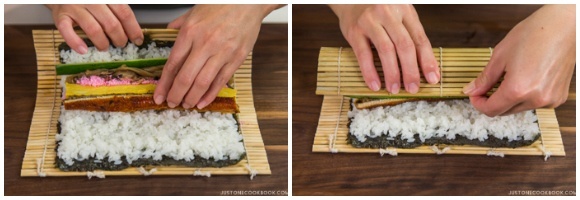
Put a sushi mat flat on your work surface with the bamboo slats left to right, so you can roll the mat away from you. Place a piece of seaweed on the sushi mat with one of the seaweed's sides close to the front edge of the sushi mat (the edge near you). Spread about 1/3 of sushi rice on the seaweed leaving a 1" (2.5cm) space at the front and far edges of the seaweed. Place Tamagoyaki, a cucumber strip, boiled shrimp, and Kanpyo next to each other in the middle of the rice. Holding the filling down, roll from the front end of the mat with the sushi mat toward the other end. Tighten the roll like a roll cake, pulling the mat to tighten. Remove the roll from the mat.
Cut the roll into 1/2" thick. Serve with soy sauce if you like.

Rabu, 07 Agustus 2013

Yakisoba is Japanese stir fried noodles

Hasil gambar untuk Yakisoba in Japanese stir fried noodles

Yakisoba is Japanese stir fried noodles. It is served with Yakisoba sauce, similar to Tonkatsu or Okonomiyaki sauce.  Yakisoba is usually fried with sliced pork and vegetables like cabbage and bean sprouts.  It is a very popular casual food (or snack) everyone likes in Japan.  You can find Yakisoba at many places like Okonomiyaki restaurants, festivals, supermarket delis, and of course, home.

Yakisoba is a great light or quick meal.  Kids stop at a little shop for Yakisoba after school,  and people stop for it at a food court in a mall during shopping.  One of the best Yakisoba can be found at summer night festivals. Street vendors cook Yakisoba on a big grill.  I don’t know what they do to it, but they make superb Yakisoba.  If you are making your own Yakisoba, you can put your favorite meat and vegetables; chicken, beef, or even squid.  The must-have toppings are Aonori and Benishoga.  The fragrance of Aonori and spicy Benishoga accentuate the flavor of Yakisoba so well.  Even when your Yakisoba is mediocre, they can upgrade the dish for you.

We use Chuka Men, Chinese style noodles, in Yakisoba, but the dish is not Chinese at all.  It is actually very Japanese, and nothing like Chow Mein other than they are both noodle dishes. Yakisoba sauce is very similar to Okonomiyaki sauce (you can even substitute Okonomiyaki sauce for Yakisoba sauce), though it is a little bit more like Worcester sauce and thinner.  We made the Yakisoba sauce using Tonkatsu sauce and Worcester sauce which are in our pantry.  You can of course purchase Yakisoba sauce if available, but this may be a good alternative.

Chuka Men for Yakisoba is usually sold as packages of fresh noodles in the refrigerated section at Japanese or some Asian markets.  Each package of noodles (square) is for one serving, and sometimes comes with Yakisoba seasoning powder.  The seasoning powder is a convenient thing and doesn’t taste bad, I admit, so you may opt to use that as your Yakisoba sauce.  For people who do not have access to any Asian markets at all,  dried spaghetti can be used instead of Chuka Men.  Similar to what we did in Ramen, boil dried spaghetti in boiling water (2L) with baking soda (2Tbsp), and cook according to the package.   You may not want to use fresh pasta because it may be too soft to stir fry after boiling.  We know it is not exactly the same as Chuka Men, but it can be a pretty good substitution for those who cannot get Chuka Men.Get all the ingredients ready, fry them together, and enjoy your own Yakisoba!

(We recommend using a non-stick pan to make Yakisoba to avoid noodles getting stuck on the pan.)

Yakisoba Recipe
Yield: 2

Ingredients :

Hasil gambar untuk Yakisoba in Japanese stir fried noodles

1/3 lb (150g) pork, thinly sliced
1 small onion
2 C cabbage, cut into about 2" squares
2 C bean sprouts
1/2 small carrot
1/4 green bell pepper
1 Tbsp oil

Aonori

Benishoga :

2 packages Chuka Men (Chinese style noodles)
salt and pepper

Yakisoba Sauce :

3 Tbsp Tonkatsu sauce
2 Tbsp Worcester sauce
1/2 Tbsp soy sauce
1/2 Tbsp Mirin

Instructions :

Cut sliced pork into bite size pieces. Prepare the vegetables: slice onion, carrot, and bell pepper thinly; cut cabbage into 2"squares; wash and strain bean sprouts. Mix all the ingredients for Yakisoba Sauce.
In a large frying pan, add oil and heat at medium high heat. Cook meat first until browned. Add onion, carrot, and bell pepper and cook about 1-2 minutes. Then add cabbage and bean sprouts, and cook until vegetables are wilted. Once water seeps out from vegetables, add Chuka Men, stir under the vegetables, lower heat and cover, and cook about 2 minutes until noodles soften.
When noodles get loose and soft, keep stirring to mix with vegetables, then add sauce and coat the whole thing for a couple of minutes. (Season with salt and pepper to taste.)
Place Yakisoba on the plate; sprinkle with Aonori and put Benishoga on top.

Sabtu, 24 November 2012

Japanese Beef Steak is very close to western steaks except for the sauce

Hasil gambar untuk Japanese Beef Steak


Japanese Beef Steak is very close to western steaks except for the sauce.  The sauce is a soy sauce based sauce, a little bit like Teriyaki sauce but maybe less sweet.  Even though Japanese people typically don’t eat big steaks as often as people in the US, the dish is still one of their favorites.

Historically, Japanese people didn’t eat much meat other than wild game.  They were agricultural people, and cows were part of the work force rather than food.  Especially after Buddhism came into the country, eating beef was prohibited or avoided until the end of Japan’s closed-door policy in the 1860s.  With the new growth of western styled food, cooking beef became more accepted. The beef steak was popularized by a western style food restaurant chain in Osaka in the 1920s.  The dish was called “Bifuteki,” which probably came from the French word “bifteck,” and became widespread all over Japan.

“Bifuteki” can be found at many kinds of restaurants in Japan: Traditional Japanese, Family, Steak House, Teppanyaki restaurants and so on.  Teppanyaki restaurants may be the most interesting place to eat steaks because it is cooked at the grill in front of you.  There are similar types of restaurants in the US, but they are not really the same thing.  The Teppanyaki restaurants in Japan are usually more upscale, and chefs there don’t do silly performances but instead more elegantly show their very skillful and sleek knife usage while cooking steaks.

Our Japanese Beef Steak may not be better than at Teppanyaki restaurants, but we have to say it’s pretty good!  Adjust the cooking time depending on the size of your steaks and how rare or well done you like your steak.  It is very quick and easy, but it can be a very special dinner.


Japanese Beef Steak Recipe

Hasil gambar untuk Japanese Beef Steak

Ingredients :

1-2 cloves garlic

1 Tbsp sugar

2 Tbsp Soy Sauce

2 Tbsp Sake

2 Tbsp water

2 1" thick New York steaks

salt and white pepper

Oil

Instructions :

Hasil gambar untuk Japanese Beef Steak

Slice garlic thinly and set aside.
Mix sugar, Soy Sauce, Sake, water in a bowl to make sauce. Set aside.
Sprinkle salt and pepper on the steaks.
Heat frying pan at medium high heat and add oil. Add sliced garlic and cook until browned. Remove garlic from the pan.
Add steaks to the same pan and cook about 2 minutes per side or however you like. Add the sauce, coating the meat with the sauce, and remove the meat from the pan. Reduce the sauce for a minute.
Place the meat on a dish, pour the reduced sauce over them, then top with the garlic for garnish.

Minggu, 15 Juli 2012

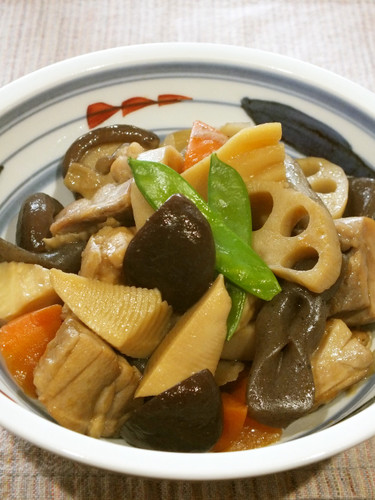
Chikuzenni a mix of vegetables such as Renkon and carrots


Hasil gambar untuk Chikuzenni


is a mix of vegetables such as Renkon (lotus root) and carrots, Konnyaku and chicken boiled in strongly flavored broth with soy sauce and sugar.  The dish is originally from the southern part of Japan, in the Fukuoka region of Kyushu island, however, it has spread all over Japan.

Chikuzenni is an ordinary Nimono dish (boiled and seasoned vegetables) for everyday, but also a big part of Osechi Ryori, Japanese New Year’s cuisine.   Strongly seasoned Chikuzenni is perfect for Osechi Ryori which is designed to last at least 3 days so house wives don’t have to cook in the beginning of new year (so they say).

Chikuzenni is also a very good Osechi dish because you can cook all the vegetables in one pot.  Each vegetable in traditional Nishime (a different term for boiled and seasoned vegetables) is cooked and seasoned separately.  So Chikuzenni is an easier version of Nishime, and that works for the busiest time of the year in Japan.  That said, you still have to prepare each vegetable in its proper way: shaping Konnyaku into twisted ropes, cutting carrots into plum flowers, etc.  It is not hard at all, but it requires some time and patience.  It is a special dish to celebrate a new year, so we like to put some effort and thought into the dish, not just slapping ingredients together (we do enough of that all year).

There are a lot of vegetables you may not be familiar with in this dish.  If there is no Japanese grocery store nearby to buy them, try other Asian stores, as they may likely carry most of ingredients.

Chikuzenni

Ingredients :

8 dried Shiitake mushrooms

8 snow peas

1 block Konnyaku

1 large carrot

1 Takenoko (Bamboo Shoot), boiled, cut into pieces 1" thick 2" long

5 oz Renkon (Lotus Root), boiled, sliced 1" thick

1 chicken breast or 2 thighs, cut into 2" pieces

1 Tbsp oil

2 1/2 cups Dashi

4 Tbsp sugar

5 Tbsp soy sauce

3 Tbsp Sake

3 Tbsp Mirin

Hasil gambar untuk Chikuzenni

Instructions :


Hasil gambar untuk Chikuzenni


Hydrate dried Shiitake mushrooms in water in a medium bowl.
Blanch the snow peas in boiling water or Dashi with a pinch of salt.
Cut Konnyaku into 1/2" thick pieces, make 1/2" slit in the middle of the piece, and thread an end through the hole to make like a twisted rope (you can blanch them as well if you don't like the smell).
Cut carrot into 1/2" thick rounds, then cut with a flower shaped cookie cutter (please watch the video to see how to cut for a 3-D effect).
In a large pot, add oil and heat at medium heat. When the oil becomes hot, add chicken pieces and cook until brown (no need to cook through). Add all vegetables except the Shiitake and the snow peas and cook and stir for a couple of minutes. Then add Shiitake and Dashi, cover, and cook for 15-20 minutes until vegetables become soft.
Add sugar, soy sauce, Sake, and Mirin, stir, and cook another 15-20 minutes uncovered.
Remove from heat and let it continue to cook, covered, so the meat and vegetables absorb flavor from the soup. Serve with snow peas as garnish.