Rabu, 07 Agustus 2013
Yakisoba is Japanese stir fried noodles
Yakisoba is Japanese stir fried noodles. It is served with Yakisoba sauce, similar to Tonkatsu or Okonomiyaki sauce. Yakisoba is usually fried with sliced pork and vegetables like cabbage and bean sprouts. It is a very popular casual food (or snack) everyone likes in Japan. You can find Yakisoba at many places like Okonomiyaki restaurants, festivals, supermarket delis, and of course, home.
Yakisoba is a great light or quick meal. Kids stop at a little shop for Yakisoba after school, and people stop for it at a food court in a mall during shopping. One of the best Yakisoba can be found at summer night festivals. Street vendors cook Yakisoba on a big grill. I don’t know what they do to it, but they make superb Yakisoba. If you are making your own Yakisoba, you can put your favorite meat and vegetables; chicken, beef, or even squid. The must-have toppings are Aonori and Benishoga. The fragrance of Aonori and spicy Benishoga accentuate the flavor of Yakisoba so well. Even when your Yakisoba is mediocre, they can upgrade the dish for you.
We use Chuka Men, Chinese style noodles, in Yakisoba, but the dish is not Chinese at all. It is actually very Japanese, and nothing like Chow Mein other than they are both noodle dishes. Yakisoba sauce is very similar to Okonomiyaki sauce (you can even substitute Okonomiyaki sauce for Yakisoba sauce), though it is a little bit more like Worcester sauce and thinner. We made the Yakisoba sauce using Tonkatsu sauce and Worcester sauce which are in our pantry. You can of course purchase Yakisoba sauce if available, but this may be a good alternative.
Chuka Men for Yakisoba is usually sold as packages of fresh noodles in the refrigerated section at Japanese or some Asian markets. Each package of noodles (square) is for one serving, and sometimes comes with Yakisoba seasoning powder. The seasoning powder is a convenient thing and doesn’t taste bad, I admit, so you may opt to use that as your Yakisoba sauce. For people who do not have access to any Asian markets at all, dried spaghetti can be used instead of Chuka Men. Similar to what we did in Ramen, boil dried spaghetti in boiling water (2L) with baking soda (2Tbsp), and cook according to the package. You may not want to use fresh pasta because it may be too soft to stir fry after boiling. We know it is not exactly the same as Chuka Men, but it can be a pretty good substitution for those who cannot get Chuka Men.Get all the ingredients ready, fry them together, and enjoy your own Yakisoba!
(We recommend using a non-stick pan to make Yakisoba to avoid noodles getting stuck on the pan.)
Yakisoba Recipe
Yield: 2
Ingredients :
1/3 lb (150g) pork, thinly sliced
1 small onion
2 C cabbage, cut into about 2" squares
2 C bean sprouts
1/2 small carrot
1/4 green bell pepper
1 Tbsp oil
Aonori
Benishoga :
2 packages Chuka Men (Chinese style noodles)
salt and pepper
Yakisoba Sauce :
3 Tbsp Tonkatsu sauce
2 Tbsp Worcester sauce
1/2 Tbsp soy sauce
1/2 Tbsp Mirin
Instructions :
Cut sliced pork into bite size pieces. Prepare the vegetables: slice onion, carrot, and bell pepper thinly; cut cabbage into 2"squares; wash and strain bean sprouts. Mix all the ingredients for Yakisoba Sauce.
In a large frying pan, add oil and heat at medium high heat. Cook meat first until browned. Add onion, carrot, and bell pepper and cook about 1-2 minutes. Then add cabbage and bean sprouts, and cook until vegetables are wilted. Once water seeps out from vegetables, add Chuka Men, stir under the vegetables, lower heat and cover, and cook about 2 minutes until noodles soften.
When noodles get loose and soft, keep stirring to mix with vegetables, then add sauce and coat the whole thing for a couple of minutes. (Season with salt and pepper to taste.)
Place Yakisoba on the plate; sprinkle with Aonori and put Benishoga on top.
Sabtu, 24 November 2012
Japanese Beef Steak is very close to western steaks except for the sauce
Japanese Beef Steak is very close to western steaks except for the sauce. The sauce is a soy sauce based sauce, a little bit like Teriyaki sauce but maybe less sweet. Even though Japanese people typically don’t eat big steaks as often as people in the US, the dish is still one of their favorites.
Historically, Japanese people didn’t eat much meat other than wild game. They were agricultural people, and cows were part of the work force rather than food. Especially after Buddhism came into the country, eating beef was prohibited or avoided until the end of Japan’s closed-door policy in the 1860s. With the new growth of western styled food, cooking beef became more accepted. The beef steak was popularized by a western style food restaurant chain in Osaka in the 1920s. The dish was called “Bifuteki,” which probably came from the French word “bifteck,” and became widespread all over Japan.
“Bifuteki” can be found at many kinds of restaurants in Japan: Traditional Japanese, Family, Steak House, Teppanyaki restaurants and so on. Teppanyaki restaurants may be the most interesting place to eat steaks because it is cooked at the grill in front of you. There are similar types of restaurants in the US, but they are not really the same thing. The Teppanyaki restaurants in Japan are usually more upscale, and chefs there don’t do silly performances but instead more elegantly show their very skillful and sleek knife usage while cooking steaks.
Our Japanese Beef Steak may not be better than at Teppanyaki restaurants, but we have to say it’s pretty good! Adjust the cooking time depending on the size of your steaks and how rare or well done you like your steak. It is very quick and easy, but it can be a very special dinner.
Japanese Beef Steak Recipe
Ingredients :
1-2 cloves garlic
1 Tbsp sugar
2 Tbsp Soy Sauce
2 Tbsp Sake
2 Tbsp water
2 1" thick New York steaks
salt and white pepper
Oil
Instructions :
Slice garlic thinly and set aside.
Mix sugar, Soy Sauce, Sake, water in a bowl to make sauce. Set aside.
Sprinkle salt and pepper on the steaks.
Heat frying pan at medium high heat and add oil. Add sliced garlic and cook until browned. Remove garlic from the pan.
Add steaks to the same pan and cook about 2 minutes per side or however you like. Add the sauce, coating the meat with the sauce, and remove the meat from the pan. Reduce the sauce for a minute.
Place the meat on a dish, pour the reduced sauce over them, then top with the garlic for garnish.
Minggu, 15 Juli 2012
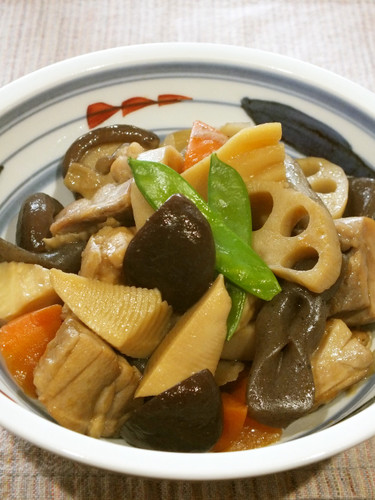
Chikuzenni a mix of vegetables such as Renkon and carrots

is a mix of vegetables such as Renkon (lotus root) and carrots, Konnyaku and chicken boiled in strongly flavored broth with soy sauce and sugar. The dish is originally from the southern part of Japan, in the Fukuoka region of Kyushu island, however, it has spread all over Japan.
Chikuzenni is an ordinary Nimono dish (boiled and seasoned vegetables) for everyday, but also a big part of Osechi Ryori, Japanese New Year’s cuisine. Strongly seasoned Chikuzenni is perfect for Osechi Ryori which is designed to last at least 3 days so house wives don’t have to cook in the beginning of new year (so they say).
Chikuzenni is also a very good Osechi dish because you can cook all the vegetables in one pot. Each vegetable in traditional Nishime (a different term for boiled and seasoned vegetables) is cooked and seasoned separately. So Chikuzenni is an easier version of Nishime, and that works for the busiest time of the year in Japan. That said, you still have to prepare each vegetable in its proper way: shaping Konnyaku into twisted ropes, cutting carrots into plum flowers, etc. It is not hard at all, but it requires some time and patience. It is a special dish to celebrate a new year, so we like to put some effort and thought into the dish, not just slapping ingredients together (we do enough of that all year).
There are a lot of vegetables you may not be familiar with in this dish. If there is no Japanese grocery store nearby to buy them, try other Asian stores, as they may likely carry most of ingredients.
Chikuzenni
Ingredients :
8 dried Shiitake mushrooms
8 snow peas
1 block Konnyaku
1 large carrot
1 Takenoko (Bamboo Shoot), boiled, cut into pieces 1" thick 2" long
5 oz Renkon (Lotus Root), boiled, sliced 1" thick
1 chicken breast or 2 thighs, cut into 2" pieces
1 Tbsp oil
2 1/2 cups Dashi
4 Tbsp sugar
5 Tbsp soy sauce
3 Tbsp Sake
3 Tbsp Mirin
Instructions :

Hydrate dried Shiitake mushrooms in water in a medium bowl.
Blanch the snow peas in boiling water or Dashi with a pinch of salt.
Cut Konnyaku into 1/2" thick pieces, make 1/2" slit in the middle of the piece, and thread an end through the hole to make like a twisted rope (you can blanch them as well if you don't like the smell).
Cut carrot into 1/2" thick rounds, then cut with a flower shaped cookie cutter (please watch the video to see how to cut for a 3-D effect).
In a large pot, add oil and heat at medium heat. When the oil becomes hot, add chicken pieces and cook until brown (no need to cook through). Add all vegetables except the Shiitake and the snow peas and cook and stir for a couple of minutes. Then add Shiitake and Dashi, cover, and cook for 15-20 minutes until vegetables become soft.
Add sugar, soy sauce, Sake, and Mirin, stir, and cook another 15-20 minutes uncovered.
Remove from heat and let it continue to cook, covered, so the meat and vegetables absorb flavor from the soup. Serve with snow peas as garnish.


